After a car accident, you report the claim to your insurance company and let them handle it. You may think the accident is basically behind you.
But months later, you suddenly get served with court papers:
You’re being sued.
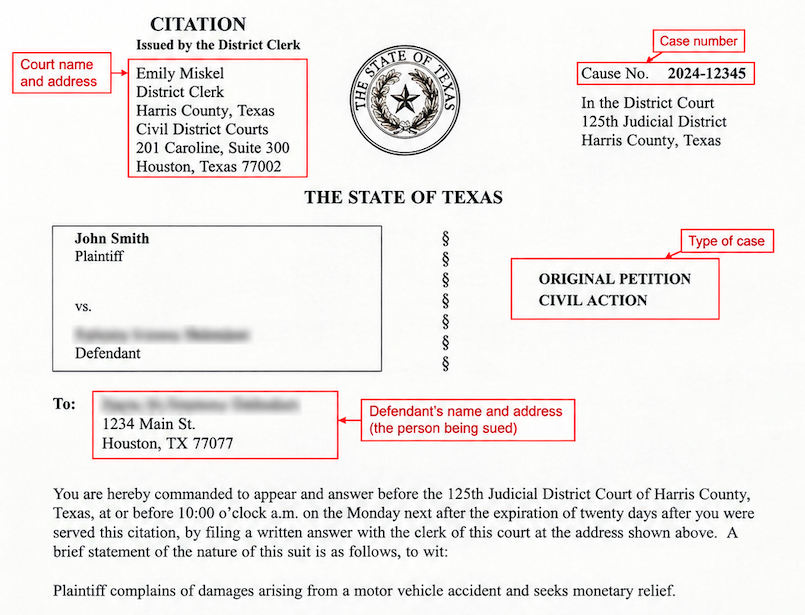
It’s normal to have a lot of questions: Why am I being sued if I already reported the accident? Do I need to hire my own attorney? What if they’re asking for more money than my insurance covers?
The good news is that being sued does not automatically mean your insurance company won’t help, and it certainly doesn’t mean you’ll have to pay whatever amount the other party is asking for.
But one thing is very important: Do not ignore the court papers.
1. Why Am I Being Sued If I Have Insurance?
Reporting an accident to your insurance company does not prevent the other party from filing a lawsuit.
Sometimes the other driver initially handles the claim directly with your insurance company and later hires an attorney.
In other cases, their attorney may have already been negotiating with your insurance company, but the two sides cannot agree on liability, the extent of the injuries, or an appropriate settlement amount. A lawsuit may also be filed to preserve the other party’s legal rights before the statute of limitations expires.
That’s why you may not receive court papers until months—or even longer—after the accident.
Being sued does not mean your insurance company has stopped handling the claim, and the amount demanded in a lawsuit is not necessarily the amount you will ultimately owe.

2. I Received Court Papers. What Should I Do?
If the lawsuit is related to a car accident, your first step usually should not be to immediately hire your own attorney.
Contact the auto insurance company that insured you on the date of the accident as soon as possible.
Send them all of the court documents you received. If you already have a claim number and adjuster from the original accident, contact that adjuster immediately.
Your auto liability insurance doesn't just pay covered claims. For a covered accident, your insurance company generally also has a duty to defend you and will arrange an attorney to represent you in the lawsuit, subject to the terms and conditions of your policy. Defense costs are also generally handled separately from your liability limit under a standard auto policy.
Most importantly, don't assume, “I have insurance, so I can deal with this later.”
Court documents have deadlines. Ignoring them can result in serious consequences, including the possibility of a default judgment. Make sure your insurance company has actually received the documents and is handling the lawsuit.
3. They’re Asking for $500,000, but I Only Have $50,000 of Coverage. What Happens?
This is one of the biggest concerns we hear.
If someone is demanding $500,000 and your liability limit is only $50,000, does that automatically mean you have to pay the other $450,000 yourself?
Not necessarily.

The amount someone demands is not the same as the amount they will ultimately receive.
The attorney appointed by your insurance company can defend you in the lawsuit, and the insurance company may continue negotiating with the other side. Many cases ultimately settle for an amount very different from the original demand.
For example, if your liability limit is $50,000 and the case settles for $40,000, the settlement may be handled within your available insurance coverage.
However, if the accident is serious and a settlement or judgment ultimately exceeds your available insurance coverage, the amount above your policy limit can potentially expose your personal assets.
This is exactly why liability limits matter.
If you own a home, have savings, investments, or other significant assets, consider carrying higher auto liability limits and adding an Umbrella Insurance policy for an additional layer of liability protection.
4. Can I Increase My Coverage After the Accident?
No—not for an accident that has already happened.
The coverage that matters is the policy and limits you had on the date of the accident, not the coverage you have when you receive the lawsuit.
For example, if you had $50,000 of liability coverage when the accident happened and later increased it to $250,000, the old accident would generally still be handled under the coverage and limits that were in effect when the accident occurred.
That’s why insurance needs to be set up before something happens.
Final Thoughts
If you're served with a lawsuit after a car accident, remember:
Don't panic, but don't ignore it. Contact the insurance company that covered you at the time of the accident immediately and send them all of the court documents you received.
Many people know exactly what their collision deductible is, but have no idea how much liability coverage they carry.
Unfortunately, finding out that your liability limits are too low after a serious accident is too late.
If you're not sure whether your current liability limits are enough—or whether an Umbrella policy makes sense for you—contact Zip Insurance. We can review your current coverage and help you understand how well you're protected.


